

BXT OFFICIAL STORE
BXT CARBON
PARTS · WHEELS · PEDALS · FORK · FRAME · BIKE
BXT CARBON PARTS
BXT CARBON WHEEL
BXT CARBON PEDALS
BXT CARBON FORK
BXT CARBON FRAME
BXT CARBON BIKE
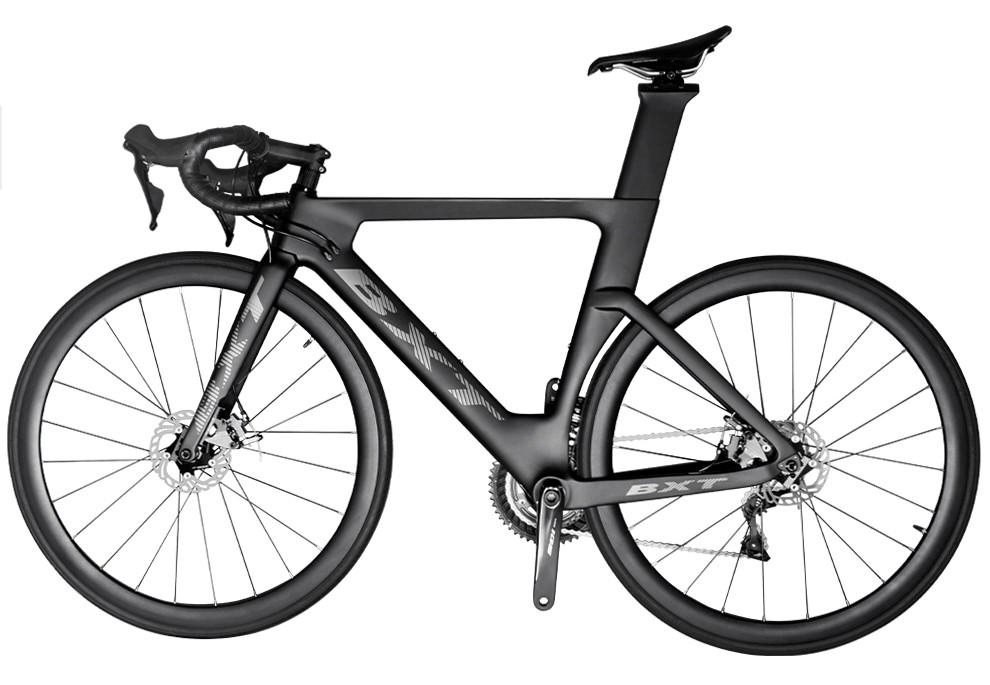
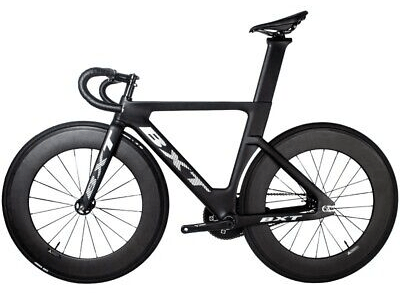
By Thomas Rivière, Product Analyst — Last updated: 29 September 2026
The fork is where handling precision and rider comfort intersect — lateral stiffness defines steering accuracy, weight determines front-end agility, and damping characteristics set the boundary between road feel and fatigue. BXT builds its carbon forks in T1000 fiber to address each discipline’s specific demands, from trail riding to track sprinting.
Frequently Asked Questions
What is the difference between a carbon and aluminium fork?
A BXT carbon fork offers 3 to 4 times better road vibration damping than aluminium at equal stiffness. The typical weight saving is 200 to 400 g for a road fork.
What is the maximum load capacity of a BXT carbon fork?
BXT forks are tested to EN 14781 standard with 80,000 cycles at 1,200 N. They are suitable for riders up to 110 kg (bike plus load included).
Can a BXT fork be fitted with a non-integrated headset?
Yes, BXT forks with a 1-1/8 inch steerer are compatible with traditional and semi-integrated headsets. Tapered 1-1/2 inch versions require a frame with a tapered headtube.
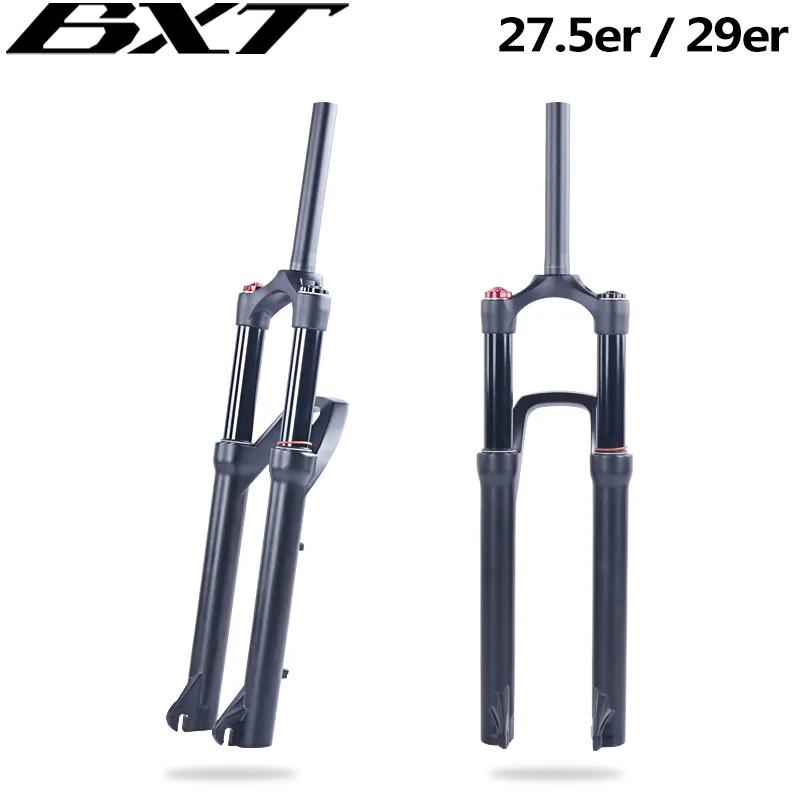
BXT CARBON MTB FORK
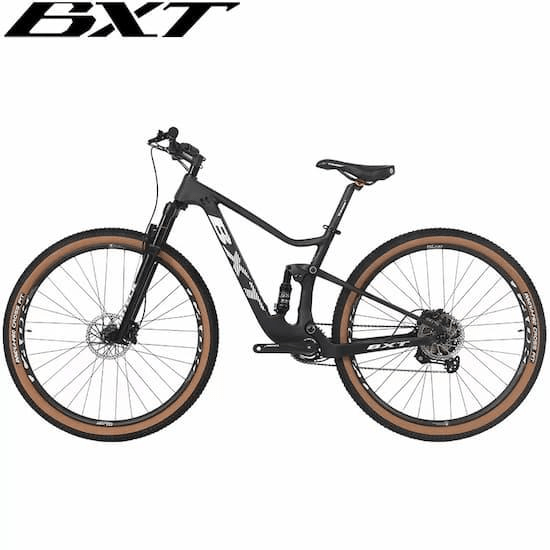
BXT MTB carbon forks absorb the combined stresses of front-wheel impacts without transmitting shock to the handlebar. T1000 carbon layups with ±45° plies in the legs deliver high torsional rigidity — essential for maintaining line in rocky sections — while UD plies handle the longitudinal loads of hard braking.
BXT’s oversized carbon steerer tube — tapered 1-1/8 to 1-1/2 inch — concentrates material at peak load points, delivering precise, predictable response on the most demanding trails. At speed on rough terrain, this stiffness prevents the steering vagueness that underbuilt forks develop under load.
BXT MTB fork weight is minimized through variable-wall-thickness construction — material where stress peaks, less where it doesn’t. The result is a light front end that improves climbing handling and reduces fatigue, while maintaining the structural integrity required for confident descending.
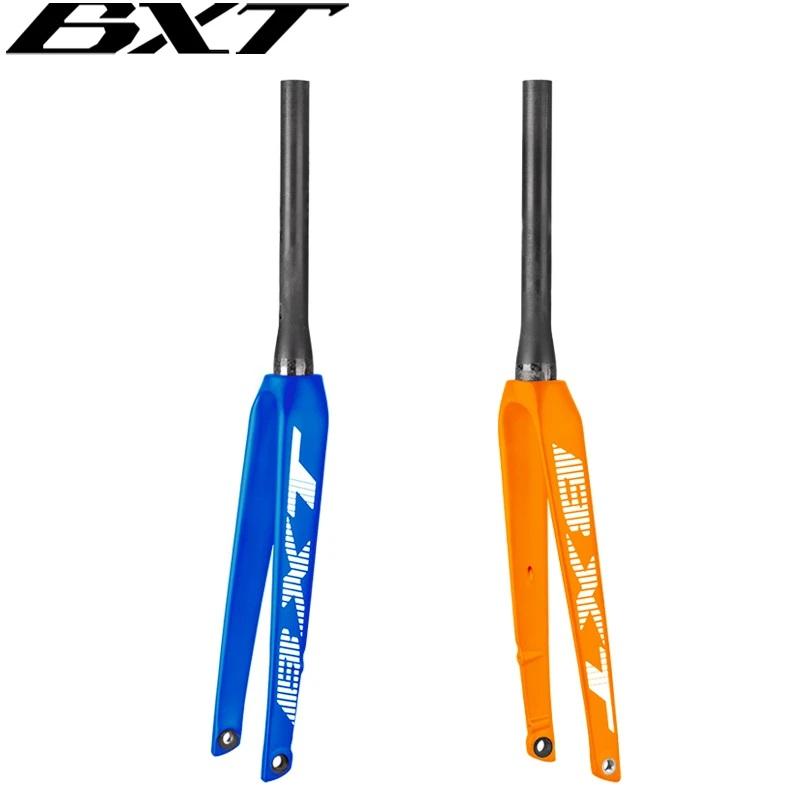
BXT CARBON ROAD, TRACK, GRAVEL FORK
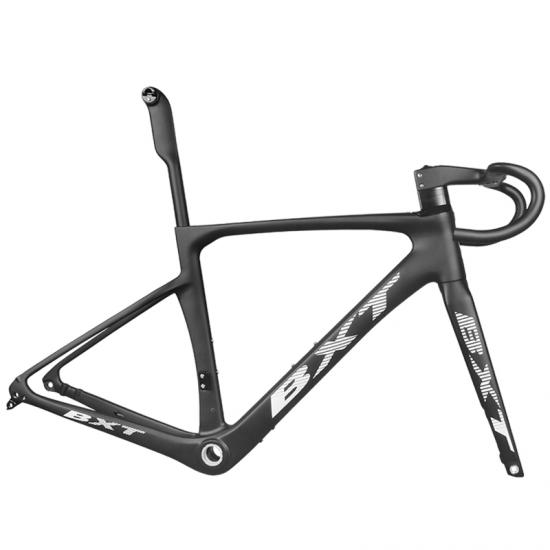
BXT road, track, and gravel forks share a common design philosophy: light and aerodynamic without sacrificing lateral stiffness. On road, elliptical-section legs reduce frontal drag and keep the front end light while maintaining the lateral rigidity needed to transmit cornering forces cleanly through every curve.
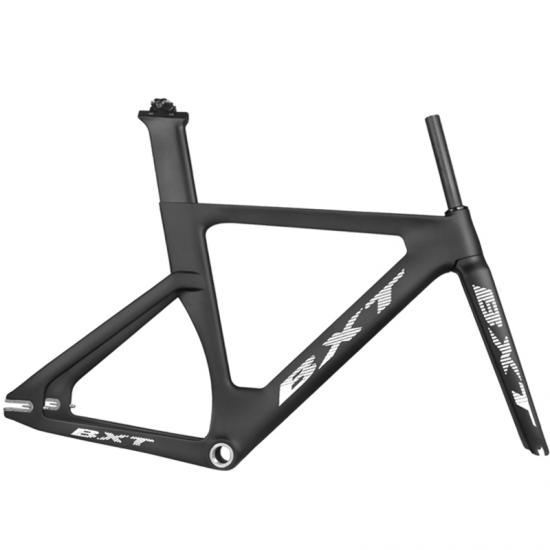
On the velodrome, BXT uses track-specific fork legs with wind-tunnel-informed profiles and a reduced offset engineered for track geometry — short, for immediate steering response in banked corners. Torsional rigidity is maximized so that every handlebar input translates directly into a course correction.
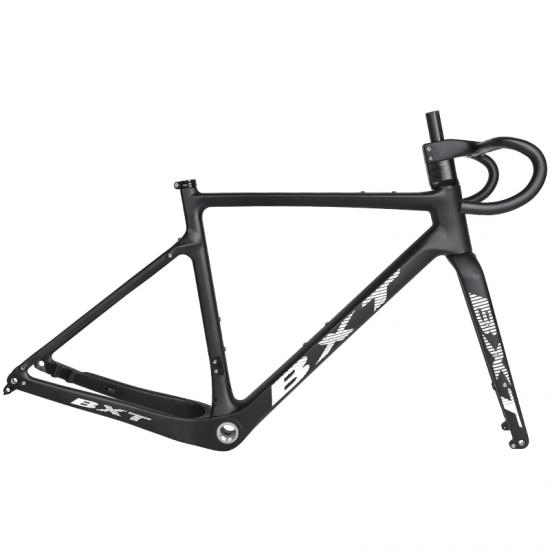
BXT gravel forks integrate mounting points for fork bags and fenders with localized carbon reinforcement at each boss — versatility without weight penalty. This design serves the loaded bikepacker and the fast gravel racer equally, adapting to the rider’s needs rather than forcing a compromise.
Safety is a crucial criterion in the design of mountain and road bikes, and BXT carbon forks are designed to meet strict quality standards in this regard. Rigorous industrial tests are carried out to ensure their strength and durability, as well as to verify their ability to withstand shock and vibration in rough terrain.
In summary, BXT carbon fork for mountain and road bikes are designed to meet the most stringent requirements in terms of weight, design and safety. They thus offer cyclists an optimal driving experience and maximize their safety.
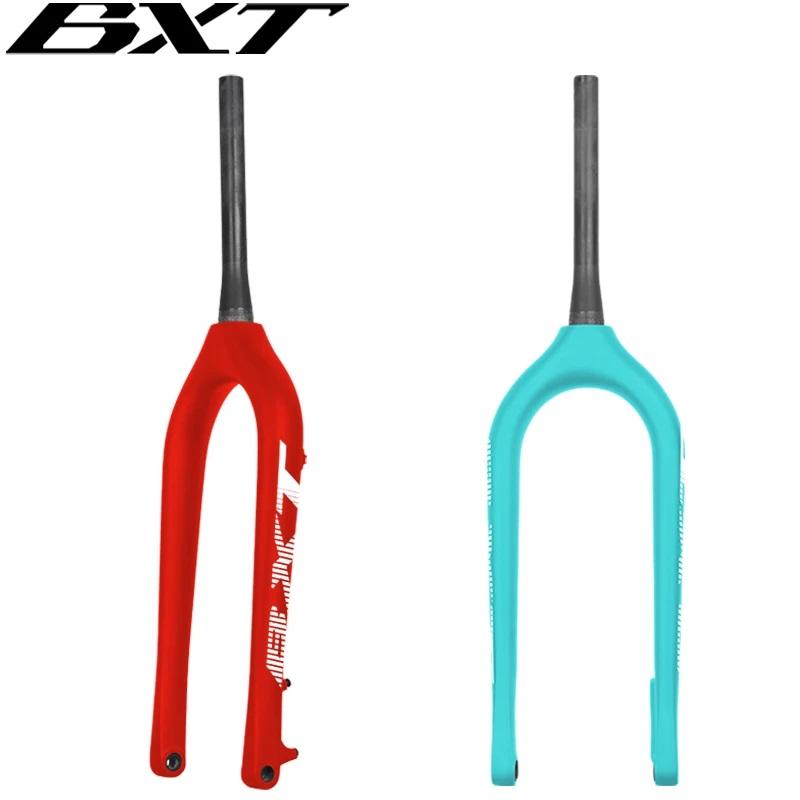
BXT CARBON AM, XC FORK
The BXT rigid carbon fork is the choice of competitors who want to gain time on climbs without sacrificing descending efficiency. Without a suspension mechanism, it eliminates the flex and bob that can sap energy from a pedal stroke, converting every effort directly into forward movement.
Vibration absorption in BXT rigid forks comes from fiber selection and orientation, not structural compliance. The legs filter high-frequency surface noise — gravel, coarse asphalt — without deforming under the lower-frequency impacts of isolated obstacles, delivering better comfort than aluminum rigid forks without any loss of stiffness.
No setup required — and that’s a genuine advantage. No air pressure to monitor, no damping to tune for changing terrain. The rider concentrates on effort, not configuration. For timed XC racing or all-mountain liaison stages, this mechanical simplicity pays dividends.
Long-term durability of a BXT rigid carbon fork exceeds that of a suspension fork: no seals to replace, no stanchions to service, no oil to change. T1000 fiber resists cyclic fatigue over tens of thousands of kilometers without measurable degradation in mechanical properties.
A BXT AM/XC rigid carbon T1000 fork weighs approximately 350 g — 600 to 900 g less than a quality suspension fork. This mass reduction at the front axle changes the bike’s dynamic character: less unsprung mass, faster acceleration, and more alert steering response.
Compatible with 15 mm × 100 mm thru-axles in standard or Boost spacing depending on model, BXT AM/XC forks fit 27.5 and 29-inch wheels with hydraulic disc brake compatibility guaranteed across the full range.
See also
Frequently Asked Questions about BXT Carbon Forks
How do I check if my carbon fork is damaged?
Warning signs include: creaking or clicking sounds when braking or turning, visible cracks or paint bubbling (often indicating deeper damage), and any unusual flex. After a crash, never ride again until the fork has been inspected by a professional. A useful DIY test: hold a white cloth under the fork and press hard on the bars — carbon dust is a clear sign of internal damage.
What are the weight savings of a BXT carbon fork over aluminium?
A BXT carbon fork typically weighs 280–380 g compared to 500–700 g for a comparable aluminium fork. This 200–300 g saving at the front wheel has a disproportionate effect on handling — front-end weight directly influences steering precision and overall balance. For climbing, the benefit is felt immediately on sustained gradients.
Are BXT carbon forks compatible with disc brakes?
BXT offers both disc-specific and rim-brake carbon forks. Disc fork models feature reinforced dropouts and IS2000 or Postmount brake mounts. Do not attempt to fit disc brakes to a rim-brake fork — the dropout is not engineered for the lateral forces involved. Always check the product specification before purchasing to confirm brake compatibility with your system.
Match fork stiffness and weight to your discipline rather than chasing the lightest option: a trail fork prioritizes damping over raw weight, while a track fork does the opposite.